01 · No noise
No engine, no burner
The only moving parts are a blower and pumps. About 55 dB(A) at one metre — quieter than a normal conversation, so the unit can stand beside staff housing.
Hydrogen CHP · 7.5–100 kW
Methane reforming plus a fuel cell: the same architecture as Japan's household fuel-cell CHP, scaled to estate housing, resorts, mills and off-grid communities. Two feeds work: bottled 97% biomethane, or raw 60% biogas taken straight from the mill with an integrated purification front end. Either way the methane is reformed on site into hydrogen and converted to electricity and 60–70 °C hot water — no pipeline, no diesel, no flame at the point of use.
Six zeros
No burner, no engine, no flue in the usual sense. This is the strongest reason to choose reforming plus a fuel cell over a diesel or gas engine — and it is measurable at the fence line, not a marketing line.
01 · No noise
The only moving parts are a blower and pumps. About 55 dB(A) at one metre — quieter than a normal conversation, so the unit can stand beside staff housing.
02 · No nitrogen oxides
A fuel cell runs at 60–200 °C. With no high-temperature flame, thermal NOx cannot form at all — it is below detection, not merely “low”.
03 · No sulphur oxides
Gas is desulphurised to below 1 ppm before the reformer. No sulphur enters the process, so none can leave it — no SO₂, no acid smell, no corrosion downstream.
04 · No dust or particulates
Gas fuel, sealed process, no combustion air and no flue: no particulates, no black smoke, no smell — unlike diesel exhaust, which is a known health hazard.
05 · Pure water only
The electrochemical reaction produces water and heat. The water is clean enough to recover for washing or irrigation instead of discharging it.
06 · Near-zero CO₂
The carbon is short-cycle carbon from palm waste, and reforming gives a concentrated CO₂ stream that is far easier to capture than dilute flue gas. This is a path to zero, not just “lower”.
A diesel genset is the exact opposite on all six counts: 95–105 dB(A), NOx, SOx, black smoke and a fuel tank. Ask for the emissions sheet with the quotation.
Why this fits Malaysia
Biogas is already being upgraded to 97% methane and sold in cylinders to households and shops. That means the hard part — gas cleaning, compression and distribution — is solved. What is missing is a quiet, low-maintenance generator that can burn that gas where it is used.
01 · Fuel
A 50-litre cylinder at 200 bar holds about 10 Nm³ of methane — roughly 99 kWh of fuel, or 10 hours at 10 kW electrical. Cylinders can be swapped like LPG, so there is no gas network to build and no stranded asset if demand moves.
02 · Cost
Off-grid estates, islands and remote resorts in Sabah pay RM 0.90–1.30 per kWh for diesel power once fuel logistics, servicing and downtime are counted. That is the number this unit competes with — not the subsidised grid tariff.
03 · Heat
A fuel cell makes electricity and heat at the same time: 42% electric, 43% recoverable as 60–70 °C water. Staff housing, kitchens, laundries, sterilisation and hotel hot water all use that heat directly, which is what lifts total efficiency to about 85%.
Two feed options
The reformer and fuel cell are the same in both cases. Only the front end changes — and it is built into the same package, not bought as a separate upgrading plant.
A · Bottled 97% biomethane
Standard specification. The gas arrives at 200 bar already at 97% methane, so the unit only needs desulphurisation and filtration before the reformer. Nothing to build, nothing to operate upstream — but you pay the bottled-gas price for every Nm³, and you depend on the cylinder supply chain.
RM 10,000/kW · FOB, installation excluded
B · Raw biogas, about 60% CH₄
Take the biogas directly off the mill pond and skip upgrading, bottling and trucking altogether. An integrated front-end purification module — desulphurisation, CO₂ removal, drying and compression — is supplied as part of our unit and lifts the gas to the ≥95% methane the reformer needs. Higher investment than option A, but the fuel is the mill’s own biogas instead of bought cylinders, and there is no separate upgrading plant to pay for.
RM 19,500/kW · FOB, integrated purification included in the unit
Both options use the same reformer and fuel cell; option B simply adds the purification front end inside the same enclosure or skid. The added cost depends on gas flow, H₂S and CO₂ content, so it is quoted per site after a gas analysis — send us your measured flow, methane content and H₂S and we will price both versions side by side.
Process
No hydrogen is stored. Hydrogen is made on demand and consumed inside the unit — that is what keeps the safety case simple and avoids a pressure vessel on site.
Range
Fuel figures are at rated output, 97% methane, LHV basis. Hot water is at a 50 K rise (20 → 70 °C). Prices are FOB to Malaysia at RM 10,000 per kW, installation excluded.
| Model | Fuel input (kW) | CH₄ (Nm³/h) | Heat (kW) | Hot water 50 K (L/h) | Indicative price, bottled gas | Price, raw biogas with purification |
|---|---|---|---|---|---|---|
| 7.5 kW | 17.9 | 1.80 | 7.7 | 132 | RM 75,000 | RM 146,250 |
| 10 kW | 23.8 | 2.39 | 10.2 | 176 | RM 100,000 | RM 195,000 |
| 15 kW | 35.7 | 3.59 | 15.4 | 265 | RM 150,000 | RM 292,500 |
| 20 kW | 47.6 | 4.79 | 20.5 | 353 | RM 200,000 | RM 390,000 |
| 30 kW | 71.4 | 7.18 | 30.7 | 529 | RM 300,000 | RM 585,000 |
| 50 kW | 119.0 | 11.97 | 51.2 | 882 | RM 500,000 | RM 975,000 |
| 75 kW | 178.6 | 17.97 | 76.8 | 1,323 | RM 750,000 | RM 1,462,500 |
| 100 kW | 238.1 | 23.95 | 102.4 | 1,763 | RM 1,000,000 | RM 1,950,000 |
Minimum order: 10 units per export shipment. Below that we still quote — with a one-off RM 60,000 export engineering and logistics charge and a small-order unit-price uplift; a single 7.5 kW unit shipped on its own spends as much on export overhead as it carries in margin. Units of 30 kW and above, or orders worth RM 300,000 and above, are exempt from the 10-unit minimum. Basis: methane LHV 9.94 kWh/Nm³; manufacturer-guaranteed 42% electrical and 43% heat recovery at rated output (85% combined) — to be reconfirmed against the guarantee sheet for each model. On raw biogas at 60% CH₄ the raw gas flow is about 1.67× the CH₄ figure, and the integrated purification module is sized to that flow. Prices are FOB Malaysia port, installation excluded: bottled 97% gas at RM 10,000/kW, raw 60% biogas with the integrated purification front end at RM 19,500/kW. Freight, insurance, SST, local installation, civils, cylinder storage, gas manifold and grid connection are excluded and quoted per site.
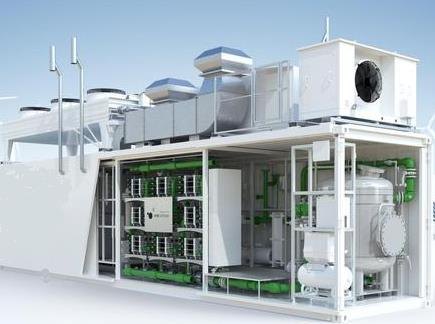
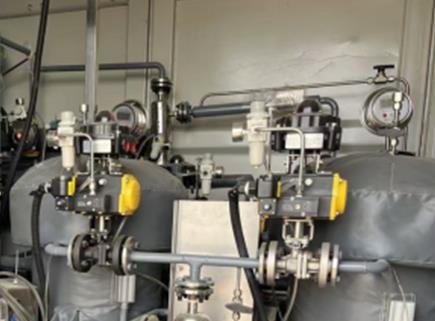
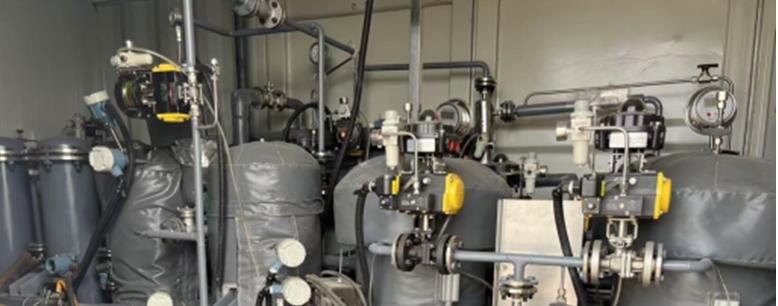
The unit
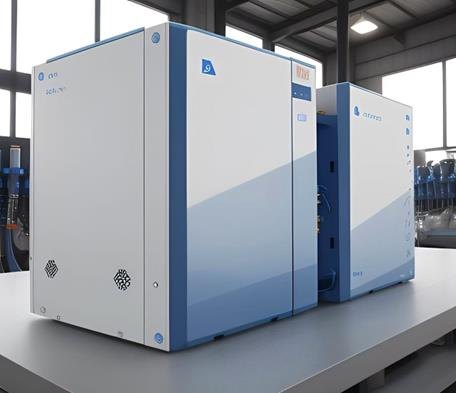
Skid-mounted and factory-tested. Arrives as one enclosure, connects to gas, water and the distribution board — no separate reformer building, no flue, no engine room.
Small units
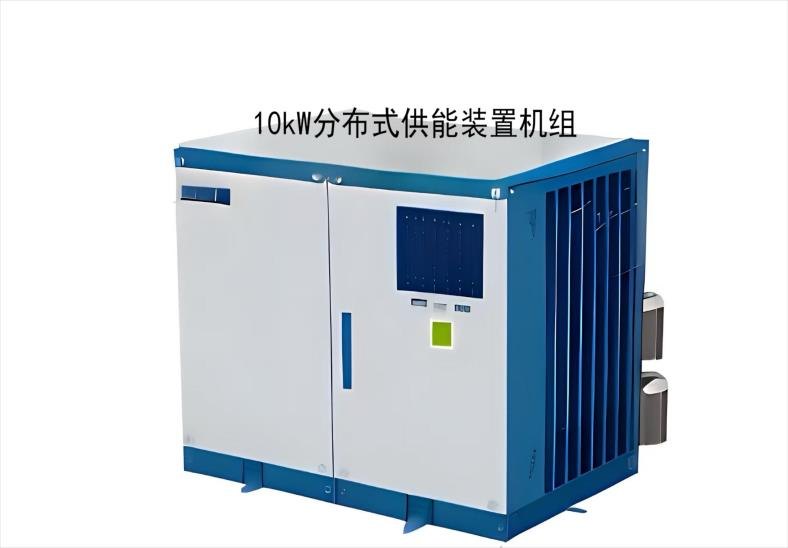
Compact all-in-one units for a house, a shop lot or a resort block: about 1.8 × 0.6 × 1.4 m for 10 kW, parallelable in blocks for larger loads.
How it works
Three drawings: the system composition, the fuel-cell reaction itself, and a household P&ID showing where the power and the heat actually go.
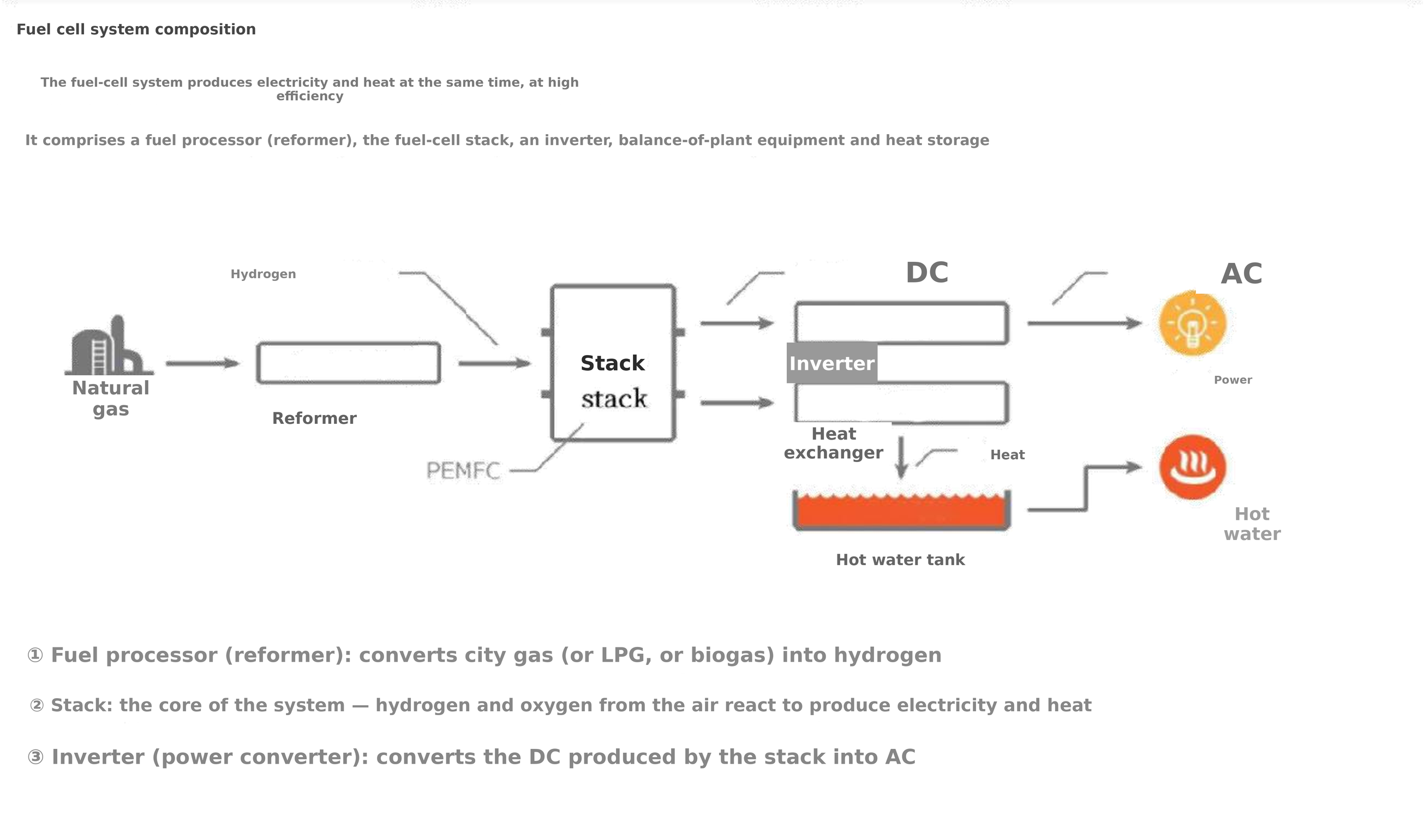
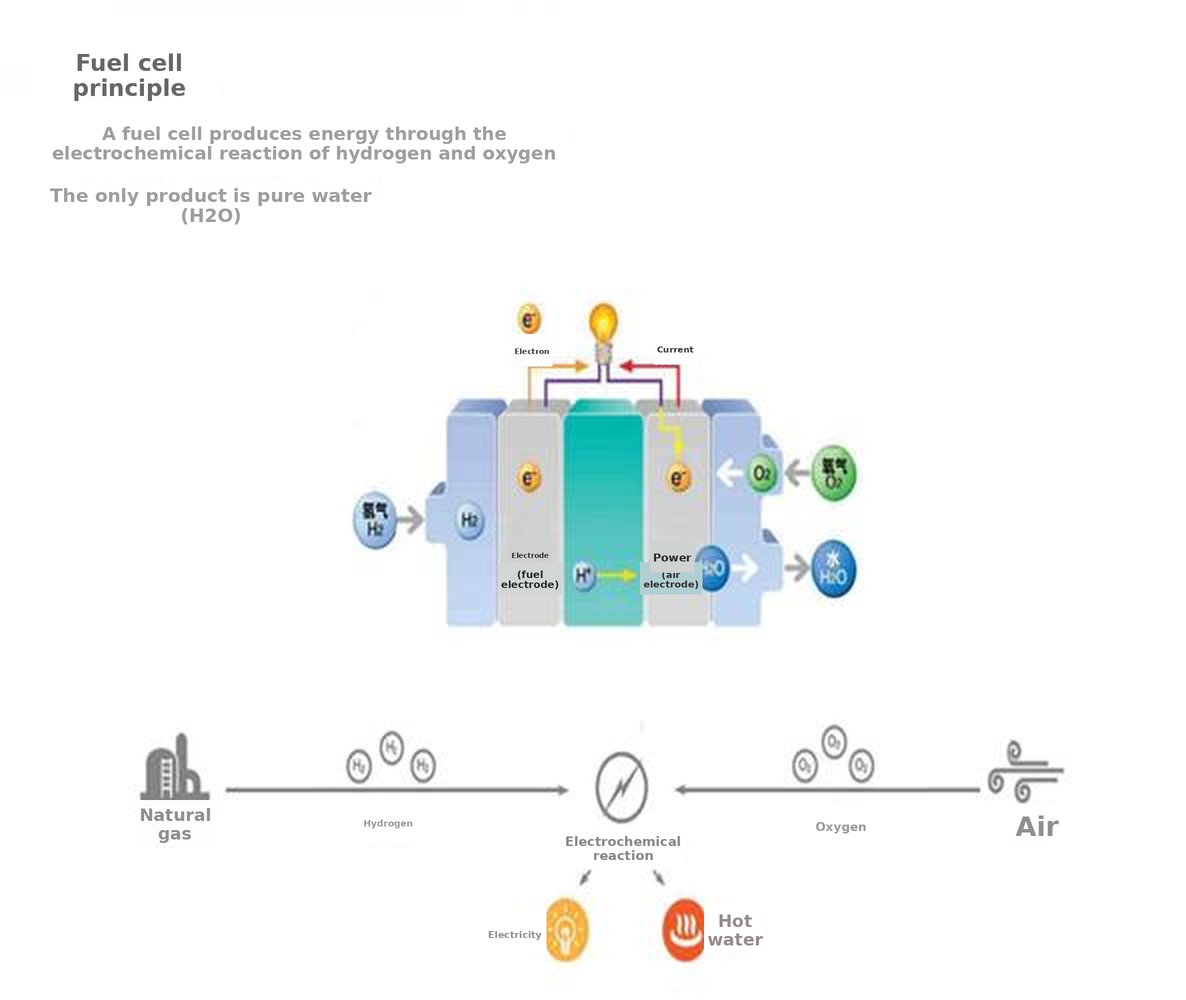
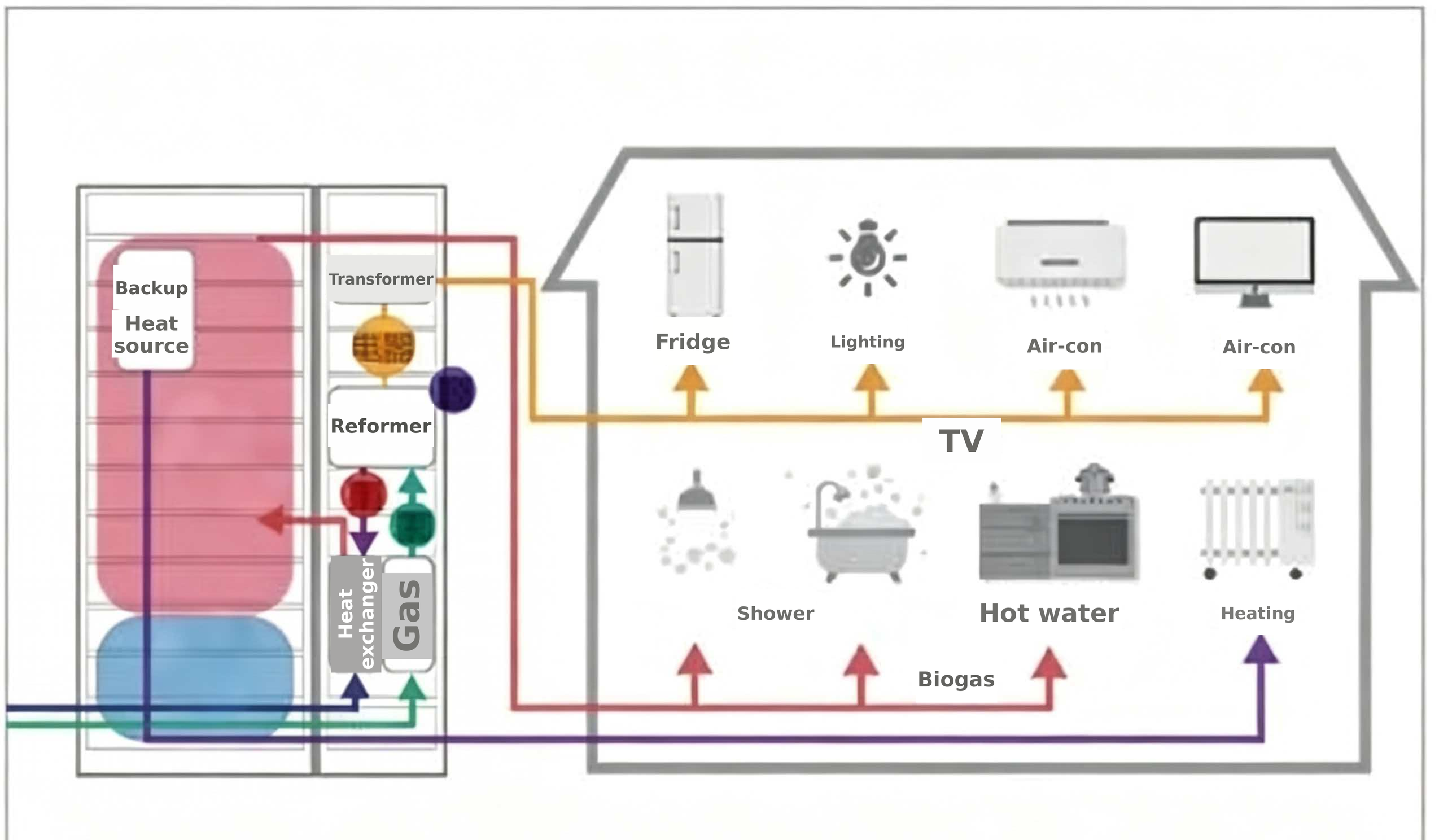
Photos and drawings: Huasen Hydrogen (Anhui) company brochure V1.4. High-resolution originals to be supplied for print use.
Engineering tools
Sizing, model selection and project economics. Every assumption is editable; the formulas are the ones used in our pre-feasibility work.
CO₂ uses 0.60 t/MWh avoided grid emission factor and treats biomethane carbon as short-cycle. At RM 10,000/kW FOB the unit is competitive where power costs RM 0.60/kWh or more, or where the heat replaces LPG or diesel. Against a subsidised grid tariff with bought gas it is still marginal — check the numbers rather than the brochure.
Worked cases
Case A · 10 kW, off-grid housing
12 staff houses, 10 kW average, diesel at RM 1.20/kWh avoided. Investment RM 100,000 FOB plus installation; 68,000 kWh a year at 85% load; fuel 16,300 Nm³ at RM 1.20; O&M RM 3,000. Net about RM 66,000 a year → payback 1.5 years, before any grant.
Case B · 50 kW, grid-connected
Same 50 kW unit against a RM 0.45/kWh grid tariff: RM 500,000 FOB, about RM 75,000 a year net — 6.7 years, inside a 10-year life but only just clearing an 8% hurdle, and only if the 43% heat is genuinely used. Remove the heat revenue and it stops working.
Scope & terms
| Included | Reformer, shift reactor, H₂ purification, fuel-cell stack, inverter, heat exchanger, controls, enclosure |
| Optional | Integrated front-end purification for raw biogas feed — desulphurisation, CO₂ removal, drying and compression inside the same package, priced per site |
| Excluded | SST, freight beyond Malaysian port, civils, cylinder store and manifold, installation, grid connection, permits |
| Warranty | 24 months on the unit, 5 years or 25,000 h on the stack, whichever comes first |
| Lead time | 4–6 months from PO and gas analysis |
| Fuel specification | CH₄ ≥ 95%, H₂S < 1 ppm, siloxanes < 0.1 mg/Nm³, no condensate |
| Price basis | Bottled-gas version: FOB RM 10,000/kW, installation excluded, valid 90 days, minimum 10 units per export order (units of 30 kW and above, or orders worth RM 300,000 and above, are exempt). Orders below 10 units are quoted at RM 12,500/kW plus a one-off RM 60,000 export engineering and logistics charge. Raw-biogas version with the integrated purification front end: quoted per site. Both subject to gas analysis and site survey. |
| Option | Power | Heat | Noise | RM/kW |
|---|---|---|---|---|
| Diesel genset | — | none | high | 800–1,500 |
| Gas engine CHP | 35% | 43% | medium | 1,800–2,600* |
| H₂ fuel-cell CHP | 42% | 43% | low | 10,000 / 19,500 |
| NOx · SOx · dust | high | low | none | none |
| Solar + battery | — | none | none | 3,000–5,000 |
* Gas-engine CHP is the 500–1,000 kW class; it has no model below 100 kW. The fuel-cell unit is the only option in this range that gives quiet, flame-free power with usable heat at 7.5 kW upwards.
FAQ
Yes — with the integrated purification front end. Raw POME biogas at about 60% methane is desulphurised, stripped of CO₂, dried and compressed inside the same package, then fed to the reformer at ≥95% CH₄. The reformer itself still needs concentrated methane; what changes is that we do the upgrading in the unit instead of you buying bottled gas. Investment is higher than the bottled-gas version and is quoted per site on gas flow, H₂S and CO₂.
No. Hydrogen is produced on demand and consumed inside the unit within seconds. There is no hydrogen vessel, no high-pressure storage and no delivery of hydrogen.
Annual service, reformer catalyst every 3–5 years, fuel-cell stack every 5–8 years (25–35% of unit price). Budget 3% of capex a year and you will not be surprised.
Yes. Units parallel on the AC side up to 1 MW, and a failed unit only takes its share of the load offline — which is why we prefer 2 × 50 kW to 1 × 100 kW where the budget allows.
All figures on this page are indicative engineering estimates for pre-feasibility. Formal quotation requires gas analysis, load profile and site survey.